These are nutty times

I apologize if this offends you.

But I’m sincerely struggling with the following question:

Is it racist to include an organized crime character in a book who is defined by ethnicity or nationality?

I don’t know. These are nutty times…

On one hand, we have Jeanine Cummins, an American-born, mostly Caucasian novelist, author of American Dirt, being lambasted for daring to speak sympathetically on behalf of Mexican immigrants.

On the other hand, an esteemed colleague tells me that it is offensive to refer to a character in my upcoming book as a “Jewish mobster.”

Identity is a prevalent theme in my novels. In The Improbable Wonders of Moojie Littleman, the main character is disabled and stutters, therefore treated as if he were unintelligent (though he’s smarter than most). Early-1900s America experienced a gout of immigrants. It was a time of unparalleled racial and ethnic intolerance. Moojie believes that belonging to a family will define him. But European immigrants mistake his striking dark features—which resemble his extraterrestrial mother’s clan—for Native American. The misidentification is further amplified as they believe the enigmatic clan is comprised of native renegades who’ve come back from the dead to reclaim sacred lands. In subtext, it’s their own guilt from having persecuted, or having allowed native persecution, that haunts them.

In my upcoming book, Halfkin, I delve deeper into Moojie’s self-image, exploring his spiritual-coming-of-age, self-mastery, and healing. He’s healed himself by now, and in a sense has outgrown his adoptive family. And the more he identifies with them, the more miserable he is. When his hapless father and meddlesome aunt try to pressure him into marriage with the daughter of a local mobster, he breaks away to find his lost love.

The father of the girl, who I gave a fictitious name, was actually lifted out of historical records of a well-known mobster of Jewish ancestry, Monk Eastman. He was a larger-than-life guy, who was abandoned as a youngster and rose to be a famous crime boss who dominated New York’s underworld in the early 1900s. To avoid stereotyping, my version of this character is likable. He dresses like a dandy, dotes over his wife and daughter, loves pigeons, and prefers to ride a bike because he’s afraid to drive.
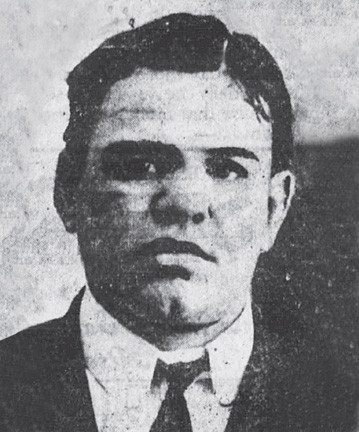
MonkEastman_mugshot_1903
Monk Eastman

An esteemed colleague took exception to my calling him a “Jewish mobster,” calling it a racist.

Wow! Really?

Correct me if I’m wrong, but don’t mobsters historically affiliate with ethnicity?

Is the concept of “politically correct” getting a bit uppity?
Is rationality being sacrificed to the gods of double standard?

In “real” life, it never occurs to me to profile others by ethnicity. Humans are not their skin color, religion, nation, or even their bodies. In my heart-of-hearts, I believe we are all of the same intrinsic “cloth” that has nothing to do with ethnicity, race, or culture. Everyone deserves respect.

So, how do I write about a criminal from a group with shared, historic affiliations with a clan, gang, or organization, without mentioning ethnicity? Is it racist to identify a character as a Russian, Romanian, Italian, Irish (Protestant or Catholic), Korean, Japanese, or Jewish mobster?

Was it racist of Martin Scorsese to tell a story like Gangs of New York, through the experiences of Irish Catholic and Protestant gangsters, or was it historically accurate? What about the portrayal of Italian mafia in Goodfellas?

Are writers expected to choose politically correct over historically accurate?

I’m may be walking a thin line here, but I don’t believe literature will be of service if it avoids ethnicity or history unless it is to portray characters through rose-colored glasses.

Book & Film Recommendations During Quarantine…

My love goes out to all who are suffering during this crazy quarantine. Please let me know if I can help you with prayers.

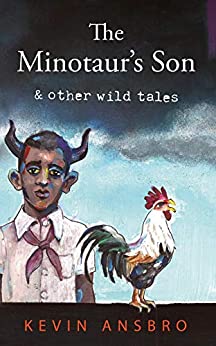
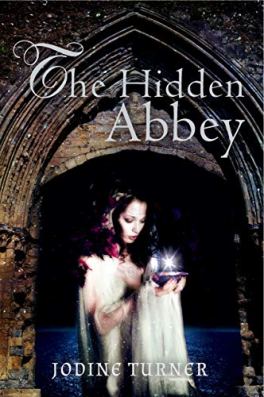
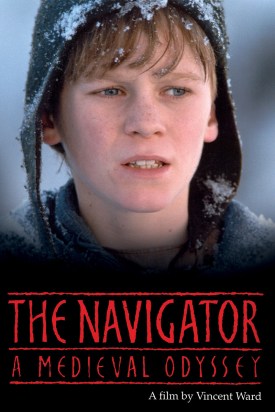
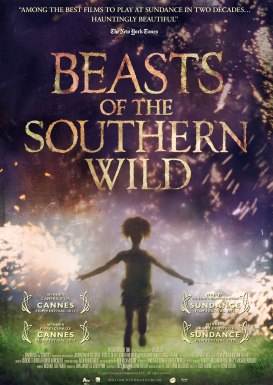
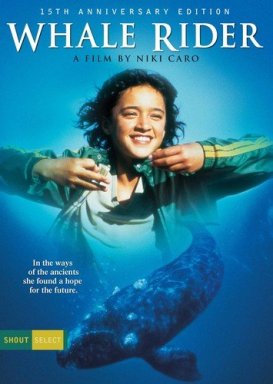
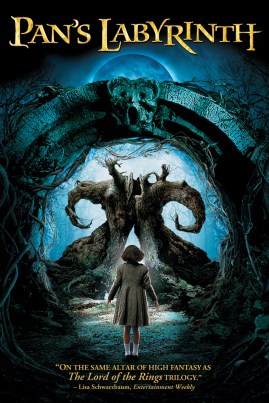
While you’re grounded at home base, books and films can be your best friends. Here are some of my recommendations. Click on book images from each of the following categories: Non-Fiction, Novella, Short Stories, and Novel. The links will take you to my reviews of them. Click on film images for trailers of award-winning stories of awesome children being leaders during difficult times. (*The Whale Rider is FREE right now on tubi.)

BOOKS

tricksterdreamercryingthenews

minotaurhiddenabbey


FILMS

The Navigator - A Medieval Odyssey
beastswhaleriderpanslabyrinth

Wonderful Review by Kimber Silver

“Only dreamers, artists and misfits enjoy an alternate reality.”
—BanaNat


Behind the beautiful mystical cover awaits the story of a youngster named Moojie. An earthquake occurs on the night an abandoned baby is found by the nuns of San Miguel de las Gaviotas; the name Moojie is smudged across his tiny forehead. These events set in motion an extraordinary life. Magic swirls around this forsaken child as the nuns watch and worry that the imperfect infant might never find a family. But fate has its own plans for the babe and sets about bringing people into his path who can see all the possibilities that lie behind his enormous black eyes.

The road that this special young man must travel will be filled with potholes and washouts, but the pilgrimage will teach him everything he needs know so that if greatness calls, he will be ready. Impatience presses down on our uncared-for traveler, because a loving family is what he yearns for most. His quest to find where he belongs is both delightful and heartbreaking: I felt for dear Moojie, cheered his every victory and wished along with him that he would someday have his heart’s desire.

“Would anyone ever love him for his tender, kind, strange, ordinary Moojie-self?”

Robin Gregory has created a sparkling world filled with touching characters and magical folk full of spit and vinegar. This touching story stirs up those underlying human needs for belonging, acceptance and love, reminding us that love is all around if we’d only open our eyes and look.

This is a charming YA novel appropriate for the young and the young at heart. Moojie is an adorable misfit, and the ending left me with a starry smile that won’t soon dim.

“I used to be mad at life, mad at everything. And then, I woke up. It takes a long time to wake up. That’s why it doesn’t happen to people who are in a hurry.”

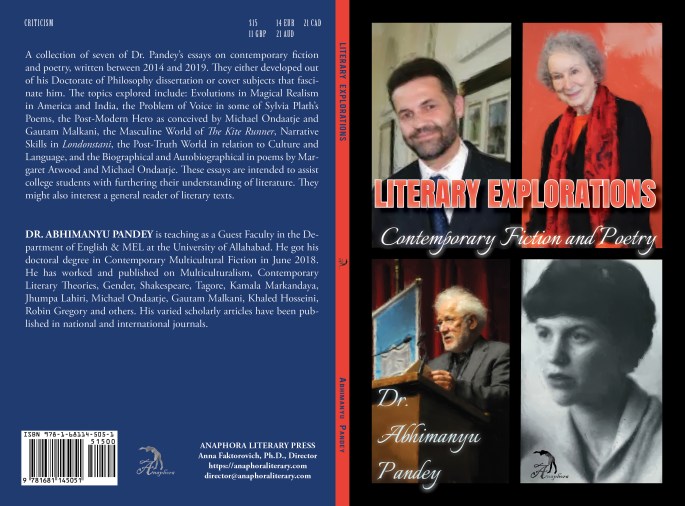
Review of “Literary Explorations: Contemporary Fiction and Poetry,” by Abhimanyu Pandey

pandey-cover-9781681145051-perfect-edited.jpg

A book for philosophers, writers, readers, and students. “Literary Explorations: Contemporary Fiction and Poetry” is an eclectic mapping of literary trends. It is a 104-page collection of academic essays and articles assembled in a way that touches on gender, voice, multi-culturalism, and spirituality in works from the East and West. Among essays exploring the texts of Atwood, Ondaatje, and Malkani, I particularly appreciate the way he handles magical realism as it concerns “The Tailor’s Needle,” by Lakshmi Raj Sharma, and my novel, “The Improbable Wonders of Moojie Littleman.” While the author is an academic, he never gets too highbrow. The information is presented as he discovered it—through an obvious love for literature, as well as for intensive study and scholarly research.

My Screenplay Adaptation “Halfkin” is out for Pre-Production Review

moojie1.meme2

Yippee! My screen adaptation of The Improbable Wonders of Moojie Littleman has gone out for review. I couldn’t believe my ears when, after two years of working on it, my producer, John Crye, finally said the words, “It’s ready!”

Film description of Halfkin: A physically-disabled orphan discovers he has miraculous  abilities similar to the Light-Eaters, a primordial race that warns intolerant locals in early-1900s America of an upcoming natural disaster.

In order to make the 294-page story fit into less than 2 hours on screen, we had to cut a few characters and scenes. Pappy and Auntie Tilda are now the central the focus of Moojie’s domestic squabbles. Light-Eaters, Ninti, Babylonia, Sarru’kan, and others remain true to the novel. Dear Moojie is exactly the same character. Early on, he struggles with disabilities and unrecognized healing powers, while searching for a sense of belonging.

More news: Book 2 of The Moojie Littleman Trilogy is nearly done. The Boy Who Killed Time picks up four years later, when 18 year-old Moojie, now hailed in his hometown as a healer, escapes family and worshipful throngs to find the inter-dimensional realm where his true love awaits. What he finds when he gets there is completely unexpected.

I’ll keep you posted on any news!